Current Research
My research explores how people and institutions draw the boundaries between religion, science, and superstition—and how those boundaries change. Working across East Asia and Europe, I examine the authority of missionaries, scholars, medical practitioners, and states to decide what counts as credible knowledge. My current projects connect these questions to the histories of empire, decolonization, and modern spirituality, with Taiwan as an important meeting point of global religious histories.
If you are interested in collaborating on any of these projects, please get in touch!

Temple deities in Changde, Hunan, c. 1900–1919, photographed in an American Presbyterian missionary collection. The accompanying family caption reveals the religious judgments through which missionaries viewed local worship. Yale Divinity Library, International Mission Photography Archive. Public domain.
A Global History of Superstition
How did “superstition” become a category for judging religious life across the world? This book traces its nineteenth-century transformation through encounters among Protestant missionaries, scholars of comparative religion, colonial administrators, and East Asian communities.
I investigate how particular Protestant assumptions about true and false belief became widely accepted standards for distinguishing religion from superstition and civilization from backwardness. As missionaries, reformers, and governments adopted these distinctions, they shaped medicine, education, and everyday religious practice. The book also follows the ritual specialists, healers, and local communities who challenged the label and sometimes turned it against those who applied it.
The project contributes to the centennial research initiative at Academia Sinica’s Institute of History and Philology.
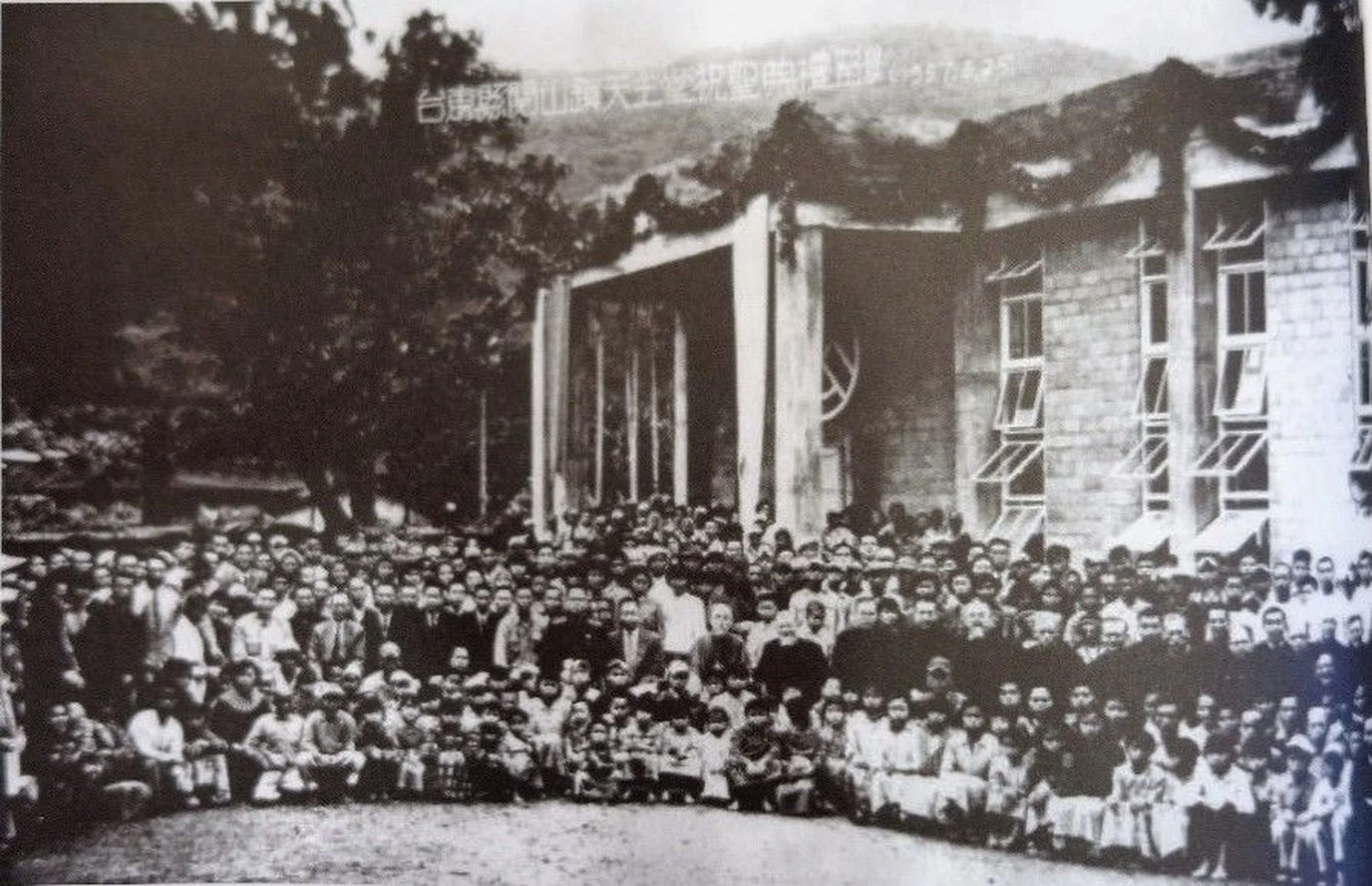
Dedication of Guanshan Catholic Church, Taitung, Taiwan, 1957. Built by the Bethlehem Mission Society, the church reflects the establishment of new Catholic institutions in postwar Taiwan. Photographer unknown. Source: Taitung County Government Cultural Affairs Department, via Taiwan Cultural Memory Bank. Public domain (PDM).
Global Catholicism in an Age of Decolonization
What happened to the global missionary enterprise when empire could no longer sustain it? This book approaches Catholic decolonization through the collapse of foreign missions in China after 1949 and the dispersal of their personnel, institutions, and networks across Asia and Europe.
Building on my work on Johannes Schütte and the Bethlehem Mission, I follow connections linking China, Taiwan, Hong Kong, the Philippines, Switzerland, and Rome. The project brings debates at the Second Vatican Council into conversation with the practical work of rebuilding seminaries, schools, and religious communities.
Taiwan occupies an important place in this history. It became both a refuge for displaced Catholic institutions and a setting in which clergy and local communities negotiated the future of mission under Cold War conditions. The book asks how these encounters reshaped religious authority and the possibilities for a locally rooted Asian Catholicism.
Collaborative and Digital Research
I also co-direct the GIS for Religious Landscape in Taiwan project, which maps the island’s sacred geography. By connecting temples, churches, shrines, and religious networks to their historical settings, this work helps explain how religious life takes shape in particular places and how it changes over time.
We plan to launch a new website for the project soon, stay tuned!